
Most people underestimate how long packing takes. A three-bedroom house with a family’s worth of accumulated belongings typically takes two to three full days to pack safely – and that’s before a single box goes onto a van. Whether you pack yourself or hand it over to a professional team comes down to five practical factors: time, breakage risk, materials cost, insurance cover, and your own capacity on moving day. This guide covers all five.
How long does packing actually take?
DIY packing almost always takes longer than planned. A realistic estimate for common property sizes:
| Property size | DIY packing time | Professional packing time |
|---|---|---|
| Studio or 1-bed flat | 1 day | 2–4 hours |
| 2-bed house or flat | 1.5–2 days | Half day |
| 3-bed family home | 2–3 days | Full day |
| 4-bed+ house | 3–5 days | 1.5–2 days |
DIY estimates assume evenings and weekends around work. Professional times are based on two packers working straight through.
Those DIY figures assume you are working full days, have all the materials to hand, and are not simultaneously managing children, work, or access arrangements. Professional packing is faster because a trained two-person crew works to a room-by-room inventory from the start – no rummaging for tape, no running out of bubble wrap at 10pm.
At Turton’s, a full-pack day is booked the day before your removal so nothing is rushed on move morning. Care, hard work, and good humour – that’s how the team approaches a long pack day, and customers notice the difference.
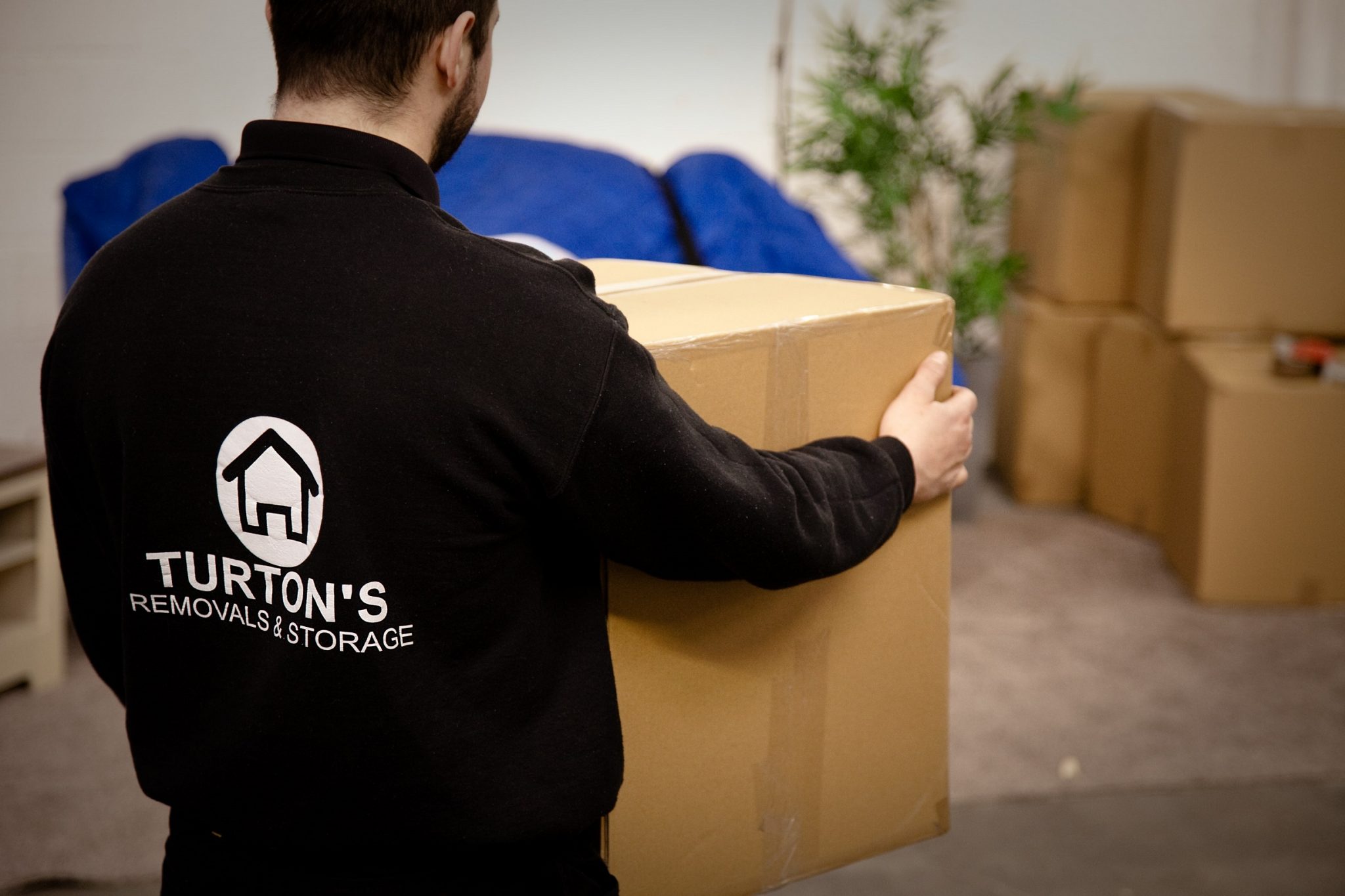
Breakage risk: DIY vs professional packing
The most expensive packing mistakes happen with fragile items: glassware wrapped in a single layer of newspaper, mirrors placed upright in a standard box, TV screens slid into a carry bag without padding. Professional packers use specialist materials – TV boxes, picture covers, double-walled boxes for fragile loads – and pack to a method rather than improvising.
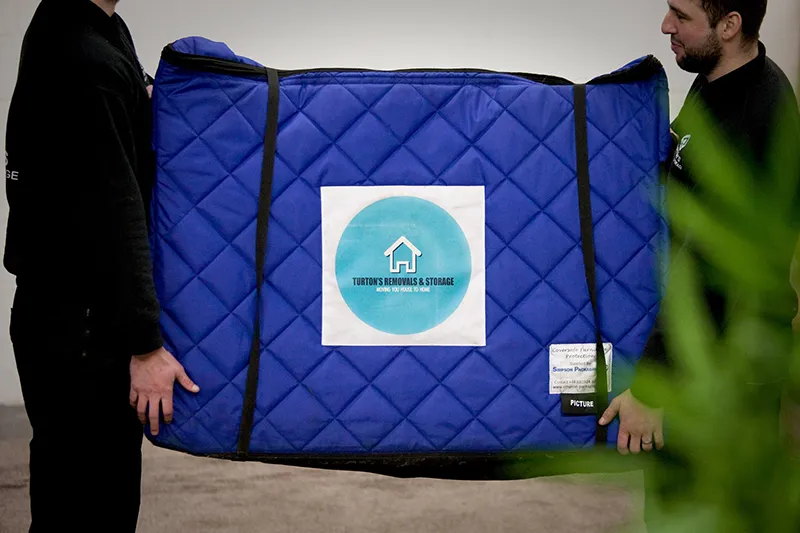
Turton’s includes mattress bags, TV boxes, sofa covers, floor protection, door covers, and picture covers as standard on every move. Those are not optional extras billed at the end – they are part of how the job is run. Customers regularly highlight this in reviews: one noted that floor rolls, door covers, and staircase covers were used throughout their property, and that the attention to detail was what stood apart.
For DIY packers, breakage risk increases when:
- Boxes are overfilled or underfilled (both cause collapse or shifting in transit)
- Heavy items are packed on top of lighter ones
- Fragile items share a box with dense, rigid objects
- Packing happens in stages over several days, with no consistent labelling
| Item | Approximate cost |
|---|---|
| 40–60 double-walled boxes | £50–£90 |
| Bubble wrap (large roll) | £15–£25 |
| Packing paper (ream) | £10–£15 |
| Parcel tape (6-pack) | £8–£12 |
| Wardrobe boxes (x3) | £30–£45 |
| Marker pens, labels | £5–£10 |
| Total | £120–£200+ |
Based on materials for a typical three-bedroom house bought at retail. We supply the same materials with your move and collect anything unused.
See our packing service for full details on what’s included and how liability works on a Turton’s move.
That cost rises if you underestimate and need to reorder mid-pack. Professional packing includes all materials in the quoted price – and the materials used are trade-grade, not the lighter versions sold in supermarkets.
Insurance and liability: what happens when something breaks
This is where the decision becomes financial rather than practical. If you pack the boxes yourself and something breaks in transit, most removals insurance policies treat that as owner-packed goods – the claim may be reduced or declined, depending on the policy wording.
If a professional team packs the box and the item breaks, the liability sits with the removals company. The risk profile is different.
Move Assured accreditation – which Turton’s holds – sets independent standards for how moves are planned, packed, and insured. Before booking any packing service, ask whether the company
is accredited, and ask specifically how their liability differs for professionally packed vs owner-packed goods. Turton’s 200+ five-star reviews across Google, Facebook, and Trustpilot include multiple references to items arriving intact after long-distance runs – including a 532-mile round trip where every item was noted as protected throughout.

Labelling and the unpacking problem
One underrated advantage of professional packing is the labelling system. A trained team works to a room-by-room inventory from the start – every box is labelled by destination room and contents category. At the new address, boxes go straight to the right room, and unpacking follows a logical sequence.
DIY packing tends to produce boxes labelled “misc” or “kitchen stuff” that end up being the last ones opened six weeks after moving day. If you are packing yourself, a consistent labelling system from day one – colour-coded by room, with a contents list on the side rather than the top – makes a real difference on arrival.
When DIY packing makes sense
Professional packing is not the right choice for every move. DIY makes practical sense when:
- You are moving a small volume (studio flat, single-person move with minimal fragile items)
- You have time and are comfortable with the physical work
- You want full control over how personal items are handled
- Cost is the primary constraint and you are willing to take on the breakage risk
For larger family moves, long-distance runs, office relocations, or any move involving fragile, valuable, or difficult-to-replace items, the case for professional packing is stronger. Lifting more than furniture – lifting the stress of the packing stage – is a real benefit when you are managing everything else a move involves.
FAQs
What does a professional packing service cost?
Turton’s does not publish fixed packing prices because every job is different – volume, access, number of fragile items, and whether you need a full pack, part pack, or fragile-only service all affect the price.
The clearest route to an accurate figure is a virtual survey via WhatsApp video, Zoom, or live call, which Turton’s offers free of charge. Call 07445 369 555 or fill in the online form to arrange one.
Can I pack some rooms myself and have the team pack others?
Yes. Part-pack and fragile-only options are available. A common approach is to pack lower-risk items like books, clothes, and kitchen basics yourself, and leave fragile items, artwork, mirrors, and electronics to the professional team.
This reduces the cost of the packing service while keeping the highest-risk items covered under professional liability.
Will my insurance cover breakages if I pack the boxes myself?
Most goods-in-transit policies distinguish between professionally packed and owner-packed goods. For owner-packed boxes, claims on the contents are often excluded or limited.
Check the policy wording before deciding how to split the packing. Turton’s can advise on how their cover applies to owner-packed goods when you request a quote.
How far in advance should I book a packing service?
For most North East moves, two to four weeks’ notice is sufficient. For large family homes, moves over a bank holiday weekend, or jobs with a fixed completion date, booking earlier gives more flexibility on packing-day scheduling.
Turton’s packs the day before your removal date as standard, so book both the move and the pack day at the same time.
Need help deciding what’s right for your move?
Let our family move yours – packing included if you need it, or just the move if you don’t.
Get a quote for your move
Call 07445 369 555
For more on what’s included in a Turton’s removal, see our house removals service.